Domain art-of-knowledge.de kaufen?
Wir ziehen mit dem Projekt
art-of-knowledge.de um.
Sind Sie am Kauf der Domain
art-of-knowledge.de interessiert?
domain@kv-gmbh.de · 0541-91531010
Domain art-of-knowledge.de kaufen?
Trocknet Karamell nicht?
Karamell kann austrocknen, wenn es nicht richtig gelagert wird. Es ist wichtig, es in einem luftdichten Behälter aufzubewahren, um Feuchtigkeitsverlust zu verhindern. Wenn Karamell zu lange der Luft ausgesetzt ist, kann es hart und brüchig werden. **
Warum klebt Karamell?
Karamell klebt, weil es aus Zucker hergestellt wird, der beim Erhitzen schmilzt und dann wieder abkühlt und aushärtet. Dieser Prozess führt dazu, dass das Karamell eine klebrige Konsistenz annimmt. Zudem enthält Karamell oft auch Fette oder Sirup, die ebenfalls zur klebrigen Textur beitragen können. **

Ähnliche Suchbegriffe für Karamell
Top-Angebote
Produkte zum Begriff Karamell:
-
Haughton, Chris: The History of InformationThe History of Information , A journey through the evolution of knowledge, communication, and information. The debut non-fiction book by best-selling author Chris Haughton. History, as it is often taught, is a list of kings and queens and treaties and events. It presents the what and when, but it rarely asks why. Why is it that we had kings and queens at all? Why then all of a sudden did we abandon them and shift to democracies? Why did the world's religions rise around the same time? Why is society dominated by men? The answers all come down to the same thing: information. The striving to share information, and - at the same time - the striving to undermine it, explains so much of today's world and connects so many seemingly unconnected things: the rise of religions, states, science, democracy, the west, militarism, racism, fascism, consumerism, big tech, polarisation, and AI. This history of information is closely connected to the history of visual communication - and as these two are largely the same - it makes sense to tell this story visually: a history of graphics told through graphics. The History of Information , through a mix of timelines, graphics, and illustrations, clearly breaks down and explains each concept for children and adults alike. The History of Information includes: A beautiful look at the story of information; from the first languages and cave paintings, through to how we communicate and record information today. Content written and illustrated by world famous and multi-award winning author and illustrator, Chris Haughton. A global journey throughout history from the origination of language, how information has been passed on and recorded, and how this affected humanity. , > , Erscheinungsjahr: 20240905, Produktform: Leinen, Autoren: Haughton, Chris, Seitenzahl/Blattzahl: 144, Themenüberschrift: JUVENILE NONFICTION / Technology / How Things Work-Are Made, Keyword: fact books for kids age 10-12; fact book for kids; fact books for kids age 8-10; kids fact books age 9 12; kids fact books; non fiction books for teenagers; non fiction books; general knowledge books; books for kids 9-12; encyclopedia for children; children's encyclopedia; curious minds book for kids; britannica children's encyclopedia; science encyclopedia for kids; children's encyclopedia age 10; non fiction books for kids 9-12; non fiction books for 7 year olds; children's encyclopedia age 7-9; children's history books; kids history books age 7; kids encyclopedia; science books for kids, Fachschema: EDV / Kindersachbuch, Jugendsachbuch~Englische Bücher / Kinderliteratur, Jugendliteratur / Sachbuch~Geschichte / Kindersachbuch, Jugendsachbuch~Technik / Kindersachbuch, Fachkategorie: Kinder/Jugendliche: Sachbuch: Geschichte, Altersempfehlung / Lesealter: 18, ab Alter: 9, bis Alter: 12, Imprint-Titels: DK Children, Warengruppe: HC/Kinderbücher/Sachbücher/Naturwissensch./Technik, UNSPSC: 49019900, Warenverzeichnis für die Außenhandelsstatistik: 49019900, Länge: 286, Breite: 236, Höhe: 22, Gewicht: 1008, Produktform: Gebunden, Genre: Importe,21,97 €*Versand: 0,00 €Sichere Weiterleitung zum Anbieter




-
Ist Karamell gesund?
Ist Karamell gesund? Karamell ist im Allgemeinen nicht als gesund angesehen, da es hauptsächlich aus Zucker und Fett besteht. Der hohe Zuckergehalt kann zu Gewichtszunahme, Karies und anderen Gesundheitsproblemen führen. Es enthält auch oft künstliche Aromen und Farbstoffe, die nicht förderlich für die Gesundheit sind. In Maßen genossen kann Karamell jedoch Teil einer ausgewogenen Ernährung sein, solange man auf die Menge und Häufigkeit des Verzehrs achtet. **
-
Wie wird Karamell hergestellt und welche verschiedenen Verwendungsmöglichkeiten gibt es für Karamell?
Karamell wird hergestellt, indem Zucker erhitzt wird, bis er schmilzt und braun wird. Es kann dann mit Sahne, Butter oder Salz verfeinert werden. Karamell kann als Topping für Eiscreme, Füllung für Bonbons oder als Aroma für Kaffee verwendet werden. **
-
Wie bleibt Karamell flüssig?
Karamell bleibt flüssig, weil es aus Zucker besteht, der beim Erhitzen schmilzt. Der Zucker wird erhitzt, bis er karamellisiert und eine goldbraune Farbe annimmt. Dadurch entsteht eine sirupartige Konsistenz, die flüssig bleibt, solange sie warm ist. Sobald das Karamell abkühlt, wird es wieder fest. **
-
Wie wird Karamell hergestellt?
Karamell wird hergestellt, indem Zucker in einem Topf geschmolzen wird. Sobald der Zucker geschmolzen ist, wird Butter hinzugefügt, um dem Karamell Geschmack und Textur zu verleihen. Anschließend wird Sahne langsam unter ständigem Rühren hinzugegeben, um die Konsistenz zu verdicken. Je nach Rezept können auch weitere Zutaten wie Salz oder Vanille hinzugefügt werden, um den Geschmack zu verfeinern. Der Karamell wird dann gekocht, bis er die gewünschte Konsistenz erreicht hat und anschließend zum Abkühlen beiseite gestellt. **

Warum gefriert Karamell nicht?
Karamell besteht aus Zucker, der beim Erhitzen geschmolzen und karamellisiert wird. Beim Abkühlen bildet sich eine feste Masse, die jedoch nicht gefriert, da sie keinen hohen Wassergehalt hat. Wasser ist der Hauptbestandteil von gefrorenen Substanzen, daher gefriert Karamell nicht. **
Hat Karamell einen Schmelzpunkt?
Ja, Karamell hat einen Schmelzpunkt. Dieser liegt in der Regel zwischen 160°C und 180°C. Beim Erhitzen schmilzt das Karamell und wird flüssig. **
Top-Angebote
Produkte zum Begriff Karamell:
-
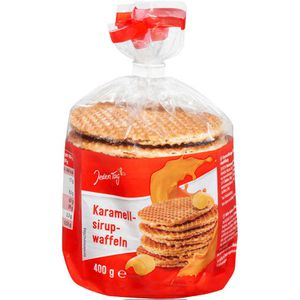
JedenTag Waffeln Karamell-Sirup, Stroopwaffeln, mit Karamell, 400 gGefüllte und knusprige Weizenwaffeln Mit süßer Karamellfüllung verfeinert Der perfekte Begleiter für ein leckeres Heißgetränk Merkmale: Geschmacksrichtung: Karamell Verpackung: Kleinpackung Lebensmittelinformationen: Inhalt: 400g, Zutaten: WEIZENMEHL, Glucose-Fructose Sirup, Margarine (Palmfett, Wasser, Rapsöl, Emulgator Mono-und Diglyceride von Speisefettsäuren, Säuerungsmittel: Citronensäure), Zucker, 3,6% BUTTER, EIER, Salz, Backtriebmittel Natriumcarbonate, Ammoniumcarbonate, Stärke, 0,13% Karamell, Emulgator Lecithine, Zimt. Enthält: WEIZENMEHL, BUTTER, EIER Kann enthalten: ERDNÜSSE, MANDELN Aufbewahrungshinweise: Kühl und trocken lagern. Lebensmittelunternehmer, in dessen Namen das Produkt vermarktet wird: Zentrale Handelsgesellschaft-ZHG-mbH, Hanns-Martin-Schleyer-Str.2, D-77656 Offenburg4,14 €*Versand: 4,15 €Sichere Weiterleitung zum Anbieter
-
Haughton, Chris: The History of InformationThe History of Information , A journey through the evolution of knowledge, communication, and information. The debut non-fiction book by best-selling author Chris Haughton. History, as it is often taught, is a list of kings and queens and treaties and events. It presents the what and when, but it rarely asks why. Why is it that we had kings and queens at all? Why then all of a sudden did we abandon them and shift to democracies? Why did the world's religions rise around the same time? Why is society dominated by men? The answers all come down to the same thing: information. The striving to share information, and - at the same time - the striving to undermine it, explains so much of today's world and connects so many seemingly unconnected things: the rise of religions, states, science, democracy, the west, militarism, racism, fascism, consumerism, big tech, polarisation, and AI. This history of information is closely connected to the history of visual communication - and as these two are largely the same - it makes sense to tell this story visually: a history of graphics told through graphics. The History of Information , through a mix of timelines, graphics, and illustrations, clearly breaks down and explains each concept for children and adults alike. The History of Information includes: A beautiful look at the story of information; from the first languages and cave paintings, through to how we communicate and record information today. Content written and illustrated by world famous and multi-award winning author and illustrator, Chris Haughton. A global journey throughout history from the origination of language, how information has been passed on and recorded, and how this affected humanity. , > , Erscheinungsjahr: 20240905, Produktform: Leinen, Autoren: Haughton, Chris, Seitenzahl/Blattzahl: 144, Themenüberschrift: JUVENILE NONFICTION / Technology / How Things Work-Are Made, Keyword: fact books for kids age 10-12; fact book for kids; fact books for kids age 8-10; kids fact books age 9 12; kids fact books; non fiction books for teenagers; non fiction books; general knowledge books; books for kids 9-12; encyclopedia for children; children's encyclopedia; curious minds book for kids; britannica children's encyclopedia; science encyclopedia for kids; children's encyclopedia age 10; non fiction books for kids 9-12; non fiction books for 7 year olds; children's encyclopedia age 7-9; children's history books; kids history books age 7; kids encyclopedia; science books for kids, Fachschema: EDV / Kindersachbuch, Jugendsachbuch~Englische Bücher / Kinderliteratur, Jugendliteratur / Sachbuch~Geschichte / Kindersachbuch, Jugendsachbuch~Technik / Kindersachbuch, Fachkategorie: Kinder/Jugendliche: Sachbuch: Geschichte, Altersempfehlung / Lesealter: 18, ab Alter: 9, bis Alter: 12, Imprint-Titels: DK Children, Warengruppe: HC/Kinderbücher/Sachbücher/Naturwissensch./Technik, UNSPSC: 49019900, Warenverzeichnis für die Außenhandelsstatistik: 49019900, Länge: 286, Breite: 236, Höhe: 22, Gewicht: 1008, Produktform: Gebunden, Genre: Importe,21,97 €*Versand: 0,00 €Sichere Weiterleitung zum Anbieter
-
Trocknet Karamell nicht?
Karamell kann austrocknen, wenn es nicht richtig gelagert wird. Es ist wichtig, es in einem luftdichten Behälter aufzubewahren, um Feuchtigkeitsverlust zu verhindern. Wenn Karamell zu lange der Luft ausgesetzt ist, kann es hart und brüchig werden. **
-
Warum klebt Karamell?
Karamell klebt, weil es aus Zucker hergestellt wird, der beim Erhitzen schmilzt und dann wieder abkühlt und aushärtet. Dieser Prozess führt dazu, dass das Karamell eine klebrige Konsistenz annimmt. Zudem enthält Karamell oft auch Fette oder Sirup, die ebenfalls zur klebrigen Textur beitragen können. **
-
Ist Karamell gesund?
Ist Karamell gesund? Karamell ist im Allgemeinen nicht als gesund angesehen, da es hauptsächlich aus Zucker und Fett besteht. Der hohe Zuckergehalt kann zu Gewichtszunahme, Karies und anderen Gesundheitsproblemen führen. Es enthält auch oft künstliche Aromen und Farbstoffe, die nicht förderlich für die Gesundheit sind. In Maßen genossen kann Karamell jedoch Teil einer ausgewogenen Ernährung sein, solange man auf die Menge und Häufigkeit des Verzehrs achtet. **
-
Wie wird Karamell hergestellt und welche verschiedenen Verwendungsmöglichkeiten gibt es für Karamell?
Karamell wird hergestellt, indem Zucker erhitzt wird, bis er schmilzt und braun wird. Es kann dann mit Sahne, Butter oder Salz verfeinert werden. Karamell kann als Topping für Eiscreme, Füllung für Bonbons oder als Aroma für Kaffee verwendet werden. **
Ähnliche Suchbegriffe für Karamell
-
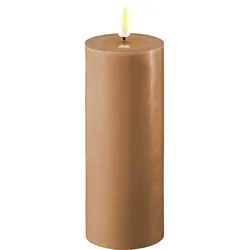
Deluxe Homeart LED Stumpenkerze Real Flame karamell, Ø5 x H12,5cm, karamellWunderschöne LED Stumpenkerze Real Flame in der Farbe Karamell von Deluxe Homeart aus Dänemark. Die schöne Kerze besteht zu 100 % aus Stearin und fühlt sich damit an und sieht aus wie eine echte Kerze. Das schöne ist aber die patentierte Flamme, welche flackert und leuchtet wie bei einer echten Kerze, jedoch batteriebetrieben ist.,Damit schaffst du stets gemütliche Stunden am Abend und brauchst die keine Sorgen machen auch mal den Raum zu verlassen.,Diese schöne LED Kerze ist besonders hochwertig verarbeitet und ist für den Innenbereich vorgesehen!,Lange Batterielaufzeit, benötigt je nach Größe 2xAA bzw. 3xAAA Batterien (nicht enthalten),Optionale ,Fernbedienung: ohne Fernbedienung kann die Kerze manuell ein- und ausgeschaltet werden.,Die optionale Fernbedienung kann für alle Deluxe Homeart Kerzen verwendet werden und ermöglicht 4 verschiedene Timer-Dauern (2,4,6,8 Stunden). Außerdem kann mit der Fernbedienung auch die Helligkeit der Kerzen einstellen. ,,13,90 €*Versand: 5,90 €Sichere Weiterleitung zum Anbieter
-
Wie bleibt Karamell flüssig?
Karamell bleibt flüssig, weil es aus Zucker besteht, der beim Erhitzen schmilzt. Der Zucker wird erhitzt, bis er karamellisiert und eine goldbraune Farbe annimmt. Dadurch entsteht eine sirupartige Konsistenz, die flüssig bleibt, solange sie warm ist. Sobald das Karamell abkühlt, wird es wieder fest. **
-
Wie wird Karamell hergestellt?
Karamell wird hergestellt, indem Zucker in einem Topf geschmolzen wird. Sobald der Zucker geschmolzen ist, wird Butter hinzugefügt, um dem Karamell Geschmack und Textur zu verleihen. Anschließend wird Sahne langsam unter ständigem Rühren hinzugegeben, um die Konsistenz zu verdicken. Je nach Rezept können auch weitere Zutaten wie Salz oder Vanille hinzugefügt werden, um den Geschmack zu verfeinern. Der Karamell wird dann gekocht, bis er die gewünschte Konsistenz erreicht hat und anschließend zum Abkühlen beiseite gestellt. **
-
Warum gefriert Karamell nicht?
Karamell besteht aus Zucker, der beim Erhitzen geschmolzen und karamellisiert wird. Beim Abkühlen bildet sich eine feste Masse, die jedoch nicht gefriert, da sie keinen hohen Wassergehalt hat. Wasser ist der Hauptbestandteil von gefrorenen Substanzen, daher gefriert Karamell nicht. **
-
Hat Karamell einen Schmelzpunkt?
Ja, Karamell hat einen Schmelzpunkt. Dieser liegt in der Regel zwischen 160°C und 180°C. Beim Erhitzen schmilzt das Karamell und wird flüssig. **
* Alle Preise verstehen sich inklusive der gesetzlichen Mehrwertsteuer und ggf. zuzüglich Versandkosten. Die Angebotsinformationen basieren auf den Angaben des jeweiligen Shops und werden über automatisierte Prozesse aktualisiert. Eine Aktualisierung in Echtzeit findet nicht statt, so dass es im Einzelfall zu Abweichungen kommen kann. ** Hinweis: Teile dieses Inhalts wurden von KI erstellt.